

In the food industry (and in all sectors dealing with perishable products—packaging and filling) are crucial steps to ensure efficiency, safety, and quality. For this reason, the demand for automated solutions has been growing steadily, transforming production lines that were once heavily dependent on manual processes.
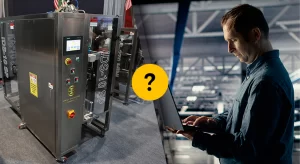
In a recent video on Ideal Solution’s YouTube channel, specialist Ryan Cabral highlighted four key benefits of automation: increased revenue and production capacity, reduced human labor, improved ergonomics and efficiency, and greater process control. All are essential, but one deserves special attention: the reduction of direct labor requirements.
Reducing Labor: Cutting Costs Without Losing Efficiency
Many companies still associate automation with simply replacing their workforce. However, the true purpose goes far beyond that: it’s about reallocating human resources to activities with greater added value, while machines take over repetitive, tiring, and error-prone tasks.
This shift has a direct impact on cost structure. Automated processes require fewer operators to keep a production line running, reducing labor charges and overtime expenses, while also eliminating waste and rework common in manual operations. The result is a significantly lower operating cost and a stronger profit margin.
Productivity and Competitiveness
With less reliance on manual labor, production becomes more stable and predictable. Automated machines don’t suffer from fatigue, variations in pace, or frequent breaks, ensuring the line runs at maximum capacity throughout the shift. This allows companies to meet deadlines with greater accuracy, reduce delays, and win new clients.
Additionally, lowering fixed labor costs increases the company’s competitiveness. Savings can be passed on to customers through more competitive pricing or reinvested in innovation and business expansion.
A Sustainable Future for Industry
Reducing direct labor doesn’t mean mass unemployment—it represents a redesign of roles within the industry. Workers can be reassigned to areas such as supervision, maintenance, quality control, and innovation—sectors that require analytical skills and contribute strategically to business growth.
Thus, automation not only reduces costs but also drives a more modern, efficient, and sustainable production model, fully aligned with the demands of Industry 4.0.
Learn More
If you want to better understand how automation can transform your company, watch the full video by Ryan Cabral on Ideal Solution’s YouTube channel:
👉 Watch on YouTube